
Properly installed vinyl siding in Wilson, NC costs $9,500–$14,000 for an average 1,800 sq ft home and should be nailed loose in the nailing slot — not tight to the wall — to allow for the roughly 3/8″ per panel thermal movement Wilson’s summer heat produces.
That nailing detail is the single biggest factor in whether vinyl siding lasts 25 years or fails in 3. See full siding service details for repair and material options if you’re already seeing problems.
Properly installed vinyl siding in Wilson, NC costs $9,500–$14,000 for an average 1,800 sq ft home and should be nailed loose in the nailing slot — not tight to the wall — to allow for the roughly 3/8″ per panel thermal movement Wilson’s summer heat produces.
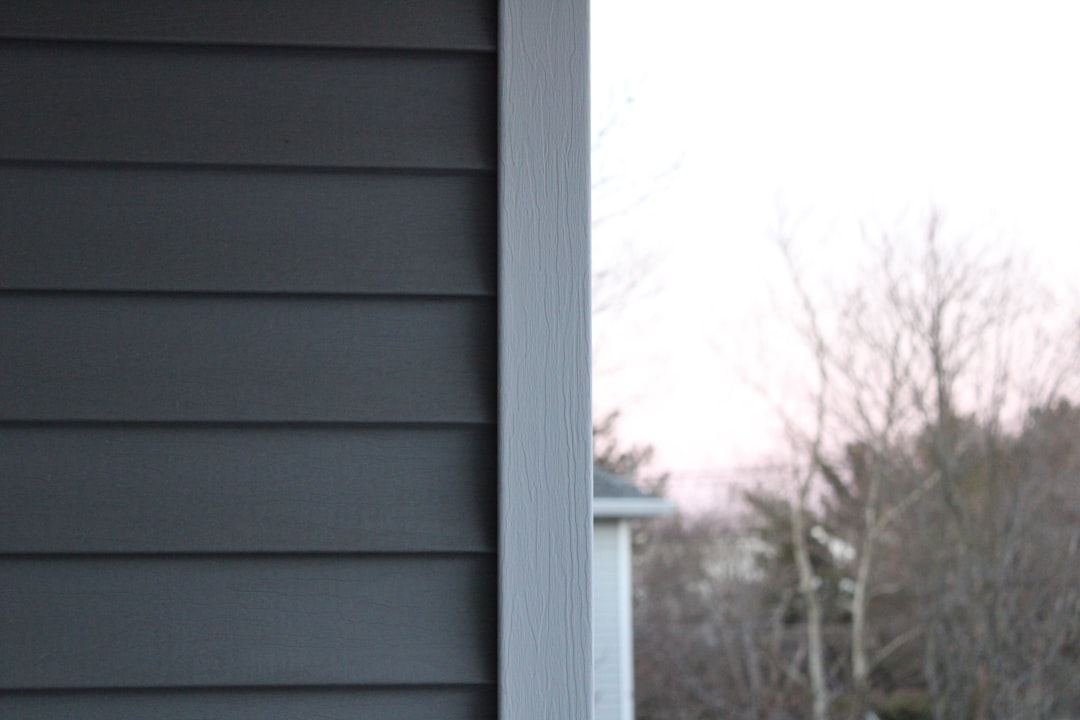
Photo by Shlok Jethwa on Unsplash
Cost Comparison by Approach
| Approach | Cost (1,800 sq ft) | Best For |
|---|---|---|
| Standard lap-and-nail over existing sheathing | $9,500–$12,000 | Walls with sound, square framing |
| Furring strips to true up wall plane first | $11,000–$14,500 | Older homes with out-of-square framing |
| Full tear-off with sheathing inspection | $12,500–$16,000+ | Any home with suspected existing moisture damage |
The Mechanics of Why Nailing Matters Here
Vinyl expands and contracts with temperature more than any other common siding material — roughly 1/16″ per 10°F per running foot. Wilson’s panel-surface temperature swings from winter lows near freezing to summer surface temps that can exceed 150°F in direct sun on a dark-colored panel. The nailing slot exists specifically to let the panel slide as it expands. A nail driven flush against the panel (rather than leaving roughly a nickel’s-width gap) locks the panel in place. With nowhere to expand, the panel bows outward — visible as a wave or ripple, usually first appearing on south- and west-facing walls that get the most direct afternoon sun.
Weep Holes and Drainage — the Detail Almost Nobody Checks
Vinyl siding is a rain screen, not a watertight barrier, which means small amounts of water are expected to get behind individual panels during wind-driven rain — the system relies on weep holes at the bottom of each panel to let that water drain back out before it pools. Installers who caulk the bottom edge of siding “to keep water out” actually seal the weep holes shut, trapping water instead of shedding it. This is invisible from a normal inspection and shows up 1-2 years later as staining or mold at the base of a wall that otherwise looks properly installed. If your siding was recently installed and you see any bead of caulk running along the bottom edge of a panel course, that’s worth asking your installer to explain — sometimes it’s a deliberate transition detail at a foundation line, but often it’s a shortcut.
Installation Sequence That Actually Prevents Failure
- House wrap first. Skipping or improperly lapping house wrap is the top cause of moisture intrusion behind vinyl siding — vinyl itself is not a water barrier, it’s a rain screen.
- Starter strip level check. An out-of-level starter strip compounds up the wall; by the top course a small starter error becomes a visibly crooked reveal line.
- Loose nailing in the slot center, not top or bottom of the slot, to allow movement in both directions.
- 1/4″ gap at all corners and openings for expansion — this is the gap installers skip when rushing a job.
This sequence matches the installation instructions published by the Vinyl Siding Institute, the industry association whose specs most vinyl manufacturers reference for warranty compliance.
Warning: If your siding was installed within the last 2 years and you’re already seeing panel buckling on sun-exposed walls, that’s a nailing-technique failure, not a product failure — and it’s typically covered under installer workmanship warranty, not the material manufacturer warranty. Check which one your paperwork actually names before assuming you’re covered.
When This Installation Method Fails
Standard lap-and-nail vinyl fails on walls with more than about 1/4″ per 4 ft of out-of-plane framing — common in homes built before the 1980s in Wilson’s older neighborhoods. On these walls, siding installed directly over the studs telegraphs every framing irregularity and won’t lap evenly at seams, creating small gaps that become water entry points.
When Not to Install Vinyl
Don’t install vinyl directly over a wall with known active moisture intrusion (a “wrap and cover” approach) — it traps existing moisture against the sheathing. Resolve the moisture source first.
DIY vs. Professional Contractor
| Situation | DIY Feasible | Call a Contractor |
|---|---|---|
| Replacing one storm-damaged panel | Yes, with matched profile | Optional |
| Full wall or full-house installation | No — nailing tolerance errors compound | Yes |
| Any wall with out-of-square framing | No | Yes |
Common Questions
Why does new vinyl siding buckle in the sun?
Vinyl siding is nailed loose in a nailing slot specifically so it can expand and contract with heat — roughly 3/8″ per 12.5 ft panel. If it’s nailed too tight, it has nowhere to expand and bows outward, usually first on south- and west-facing walls.
You May Also Find Useful
Get your free siding quote
Matched with an independent, licensed local contractor
No cost, no obligation to move forward
Most quote requests get a response within 1-2 business days
By submitting this form you consent to be contacted by phone, text, or email regarding your project, including by automated means. Consent is not a condition of purchase. Message and data rates may apply. See our Privacy Policy and Terms of Use.
Wilson Exteriors Pro is an independent local information and referral service. We are not a licensed contractor and do not perform siding or window installation ourselves. Project requests submitted through this site may be shared with an independent, licensed local contractor for a free estimate.